Sweating in synthetic fabric does two distinct things to your skin. Sweat can pull chemicals out of the plastic fibre itself, and separately, the fabric's structure traps heat and moisture against you in a way natural fibre doesn't. They're different mechanisms with different evidence behind each, so it's worth taking them one at a time.
Does sweat make synthetic fabric release chemicals onto skin?
Yes, according to a 2024 University of Birmingham study published in Environmental Science and Technology. Researchers tested common plastic microfibres using synthetic sweat and found that sweat's oily components accelerate the leaching of chemicals bound to the plastic, including brominated flame retardants, chemicals previously linked to neurotoxicity and reproductive harm in other research. Smaller microplastic particles leached these chemicals roughly twice as fast as larger ones.
The mechanism matters here more than the specific chemical. Plastic fibres don't just sit inertly against your skin. Sweat actively draws additives out of the polymer and makes them more available for skin contact, and the hotter and sweatier the conditions, the more that process is likely to happen.
Can those chemicals or plastic particles actually get into your skin?
Partially, and the size of the particle matters a lot. Intact skin has a genuinely effective barrier, the stratum corneum, and most microplastic particles are too large to cross it under normal conditions. Nanoplastics, particles under 100 nanometres, are a different story: research suggests they can penetrate or accumulate in deeper skin layers, particularly around hair follicles and sweat glands, and particularly when the skin barrier is already compromised by heat, friction, or existing irritation.
This is genuinely emerging research rather than settled science. The honest summary is that intact skin blocks most of this, but sweaty, chafed, or already-irritated skin is a meaningfully easier target, which is exactly the condition synthetic activewear tends to create over a long workout.
Sweat can pull chemicals out of synthetic fibres and make them more available to skin contact, and separately, synthetic fabric traps heat and moisture in a way that can cause its own skin problems. Both effects are more pronounced the longer and sweatier the session.
Is this the same thing as microplastics showing up in blood or placenta?
No, that's a separate exposure route. What we've covered so far is topical, chemicals and particles making contact with or entering through skin. Microplastics found in blood, lung tissue, and placental tissue in other research generally reflect ingestion and inhalation as the primary routes, swallowed or breathed in over years, not absorbed through a single workout's worth of skin contact. We go into that research specifically in our piece on synthetic clothing and hormones, if that's the angle you're looking for.
Why does synthetic fabric also cause breakouts and heat rash?
This is the second, separate mechanism, and it doesn't require any chemical leaching at all. Synthetic fibres are occlusive, they don't absorb moisture into the fibre the way cotton does, so sweat and heat stay trapped in a layer directly against your skin. That warm, damp environment softens the skin's outer barrier and creates ideal conditions for bacteria like Staphylococcus aureus to thrive, which is the underlying cause of what's commonly called "gym acne" or acne mechanica, along with folliculitis and heat rash in tight-fitting areas.
This is a different problem from the dye and finishing-chemical dermatitis we cover in our piece on activewear and skin irritation. That one is about an allergic or irritant reaction to something added to the fabric. This one is purely physical: heat and moisture with nowhere to go.
Does changing out of sweaty clothes quickly actually help?
Yes, for both mechanisms described above. The Birmingham research on chemical leaching and the separate occlusion research on heat rash and acne mechanica both point to the same practical fix: less time in warm, damp fabric means less time for either process to run. Rinsing off and changing into dry clothing promptly after a workout is one of the simplest, best-supported pieces of advice in both bodies of research, and it costs nothing to do regardless of what fabric you're wearing.
Does natural fibre avoid both problems?
Structurally, yes, for different reasons in each case. Cotton and hemp don't contain plastic, so there's no polymer for sweat to leach chemicals from in the first place. And because these fibres absorb moisture into the fibre rather than sealing it against your skin, they don't create the same trapped, occlusive microclimate that drives breakouts and heat rash. Neither fibre is a magic shield, skin can still react to a dye or get irritated by friction regardless of fabric, but the two mechanisms specific to synthetic fabric and sweat genuinely don't apply the same way.
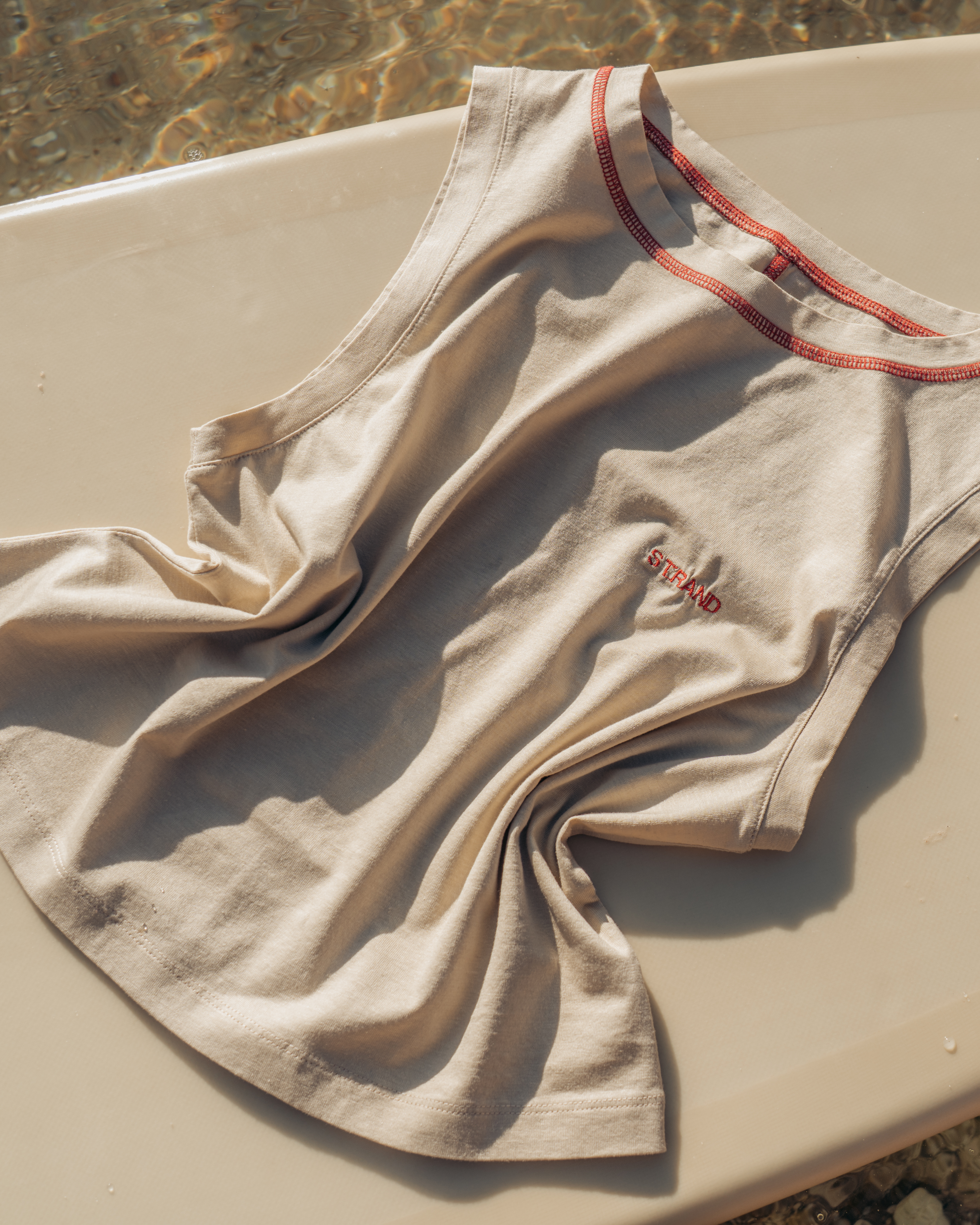
Strand's cotton-hemp jersey contains no synthetic fibre and no elastane. See the full fabric breakdown, or shop the current collection.